 4 August, 2022
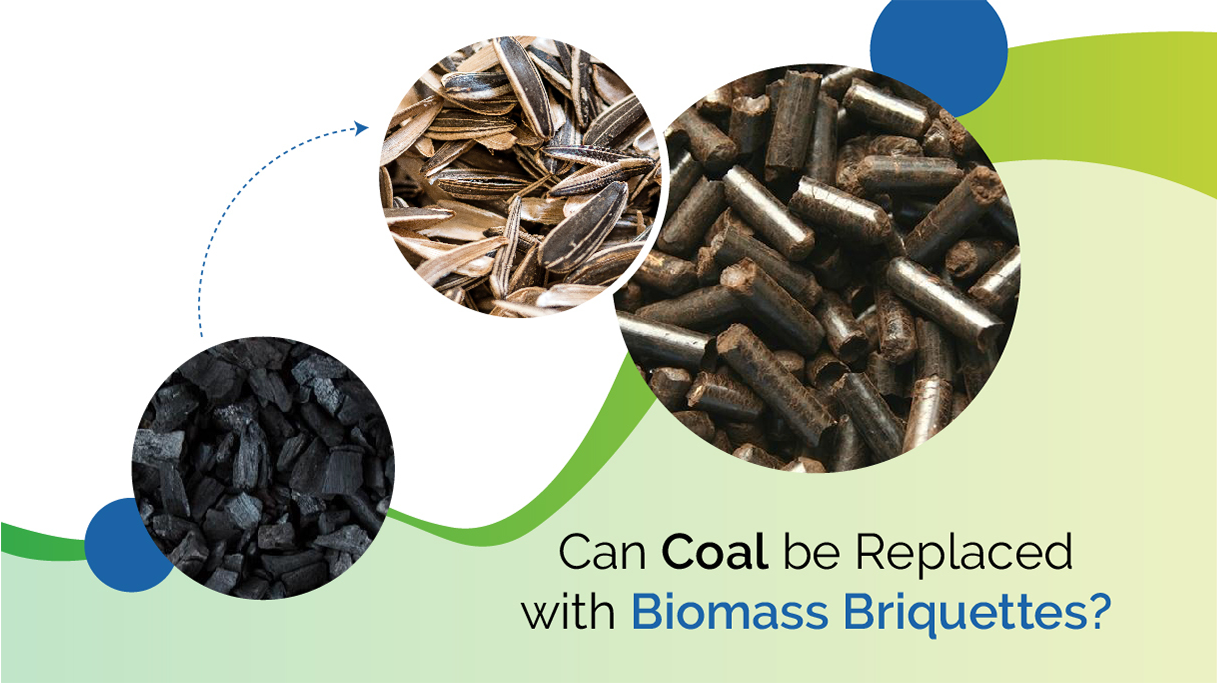
Briquettes and pellets are made by compressing biomass material under high pressure and converting them into blocks of various uniform sizes and shapes. These are energy-dense and burn with little or no smoke depending upon the type of biomass used in making them.
The process of briquetting converts loose biomass sourced from various crop residues, agro-waste, and industrial raw biowaste into dense energy-rich bricks of uniform shape and sizes. Briquettes burn without emitting smoke, so they are also known as white coal or biocoal.
The calorific value of solid Biofuels, such as briquettes, varies depending upon the type of biomass used in the manufacturing process. The various type of raw organic waste used in briquette and pellet making include (but are not limited to):- Sugarcane Bagasse
- Wood chips, shavings, sawdust
- Groundnut and Cashew Seed shells
- Rice husk and paddy straw
- Coir dust
- Wheat straw
- Sunflower waste
|
Commodity |
Commodity Residue |
GCV (Kcal/kg) |
Moisture (%weight) |
Ash (%weight) |
|---|---|---|---|---|
|
Wood |
Saw Dust |
4025 |
8 |
4 |
|
Groundnut |
Shell |
4108 |
8 |
7 |
|
Soyabean |
Husk |
4000 |
7 |
4 |
|
Groundnut and Wood |
Shell/ Saw Dust |
3813 |
10 |
9 |
|
Sugar cane and Wood |
Bagasse/ Saw Dust |
3830 |
10 |
9 |
|
Sugar cane and Wood |
Trash/ Saw Dust |
3657 |
10 |
11 |
|
Sugar cane and Coffee |
Trash/ Husk |
3754 |
10 |
10 |
|
Corn |
Cob |
3511 |
12 |
20 |
|
Soyabean and Wood |
Husk/ Saw Dust |
3666 |
9 |
11 |
 3. Availability:
India’s domestic coal production in financial 2021-22 was at a record high of 780 million tons and is projected to grow in FY 2022-23. And yet, each year, India depends on imported coal to meet its domestic requirements. This has been attributed to the boost in the economy after the pandemic which has led to surplus energy demands.
It is estimated that if the current installed capacity for biomass-based power plants is fully utilized, it could bring down the demand for coal by close to 230 million tons.
India being an agricultural country, there is immense scope for creating a solid Biofuel reserve from agricultural waste and biowaste generated from industries to ensure a continuous supply of fuels such as briquettes and pellets in place of coal.
Currently, there are limitations such as the lack of a steady supply of agricultural waste and quality suppliers of Biofuels, which can create challenges in terms of Biofuel availability throughout the year. A scattered marketplace is a major challenge that needs to be addressed to accelerate the sourcing of biomass to make solid Biofuels for replacing coal.
4. Emissions
It is a well-known fact that coal and other fossil fuels are major sources of greenhouse gas emissions, such as CO2, affecting climate change on a massive scale. Co-firing coal with briquettes and pellets is an effective way to cut down emissions from thermal plants.
The debate on whether or not briquettes and pellets are an eco-friendly alternative is still ongoing. However, burning fossil fuels has a negative impact on the environment whereas emissions from briquettes and pellets are comparatively lower.
Is Replacing Coal with Briquettes Economical?
The transition from coal to Biofuels for industrial boilers depends on various factors. This needs careful consideration of certain parameters such as
3. Availability:
India’s domestic coal production in financial 2021-22 was at a record high of 780 million tons and is projected to grow in FY 2022-23. And yet, each year, India depends on imported coal to meet its domestic requirements. This has been attributed to the boost in the economy after the pandemic which has led to surplus energy demands.
It is estimated that if the current installed capacity for biomass-based power plants is fully utilized, it could bring down the demand for coal by close to 230 million tons.
India being an agricultural country, there is immense scope for creating a solid Biofuel reserve from agricultural waste and biowaste generated from industries to ensure a continuous supply of fuels such as briquettes and pellets in place of coal.
Currently, there are limitations such as the lack of a steady supply of agricultural waste and quality suppliers of Biofuels, which can create challenges in terms of Biofuel availability throughout the year. A scattered marketplace is a major challenge that needs to be addressed to accelerate the sourcing of biomass to make solid Biofuels for replacing coal.
4. Emissions
It is a well-known fact that coal and other fossil fuels are major sources of greenhouse gas emissions, such as CO2, affecting climate change on a massive scale. Co-firing coal with briquettes and pellets is an effective way to cut down emissions from thermal plants.
The debate on whether or not briquettes and pellets are an eco-friendly alternative is still ongoing. However, burning fossil fuels has a negative impact on the environment whereas emissions from briquettes and pellets are comparatively lower.
Is Replacing Coal with Briquettes Economical?
The transition from coal to Biofuels for industrial boilers depends on various factors. This needs careful consideration of certain parameters such as
- Gross calorific value
- Availability and ease of handling
- User’s readiness to modify their boilers
- Adapting to changes in boiler equipment
- Cost considerations
The attributes of briquettes and pellets such as calorific values and energy efficiency make them an ideal fuel source to power industrial boilers. Although there are several bottlenecks in realizing their full potential as a replacement for coal, the shift in this direction is evident. The need for economical and eco-friendly alternative fuels is likely to drive this shift in the near future.
13935 Views 0 Comments
 25 February, 2026

Comments