Back

Industrial Biomass in India: Potential Biomass Sources for Energy Production

Industrial Biomass in India: Potential Biomass Sources for Energy Production

24 July, 2025

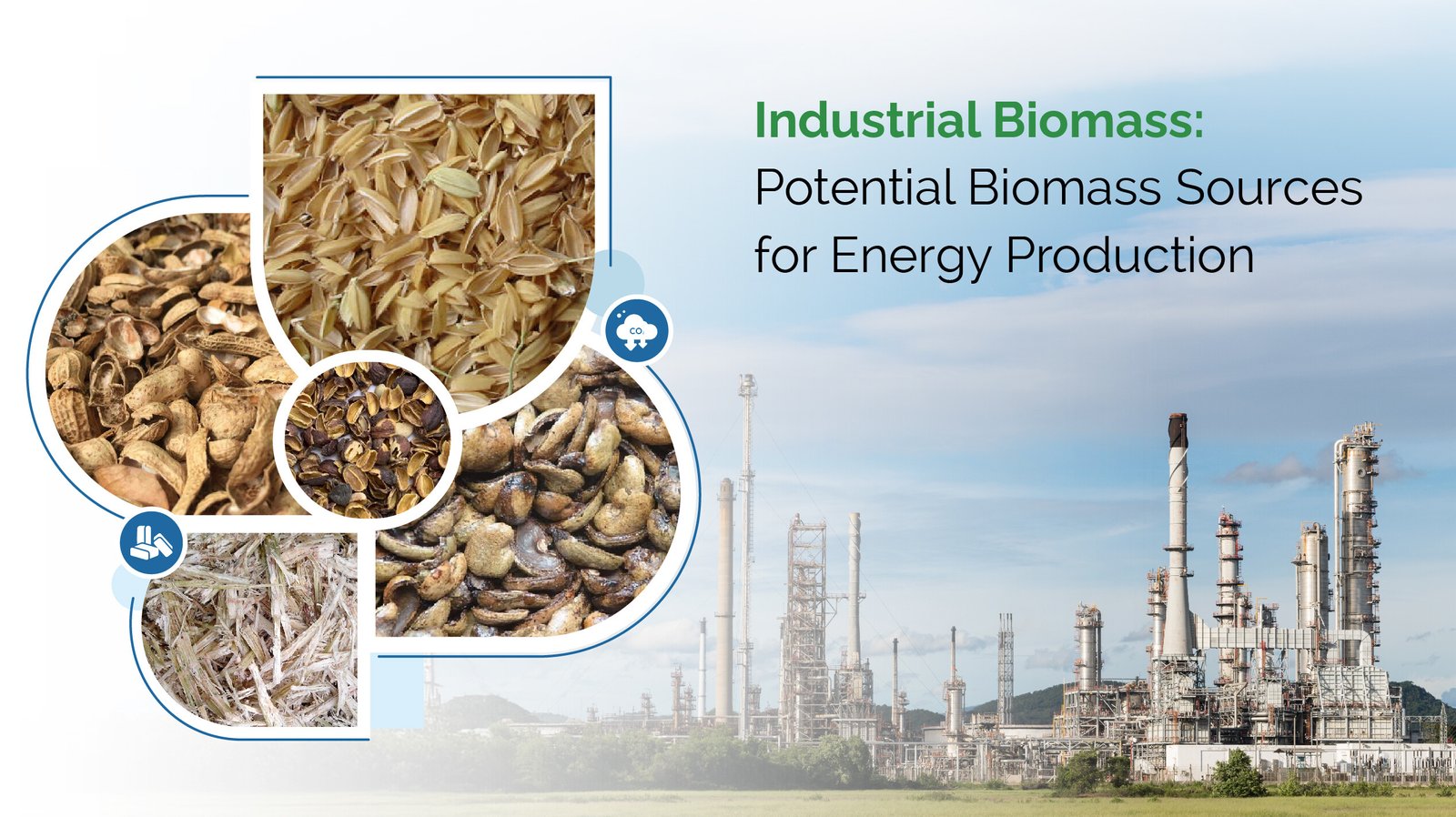
India, as one of the world's leading agricultural nations, generates vast quantities of agricultural residues that can be repurposed as biomass for energy production. Biomass, especially in the form of biomass pellets, has emerged as a key player in reducing fossil fuel dependency and promoting renewable energy use. Among the top biomass sources in India are coffee husk, groundnut shells, cashew shells, sugarcane bagasse, and rice husk. 

This article explores their energy potential, industrial uses, and availability in India.

  1. Coffee Husk
Gross Calorific Value (GCV): 3000 Kcal/kg Regions in India: Karnataka, Kerala, Tamil Nadu Coffee husk, a byproduct of coffee processing, holds significant potential for energy applications. Industries frequently convert coffee husks into coffee husk briquettes or biomass pellets, which are used as an eco-friendly fuel in boilers and furnaces. Additionally, coffee husk is utilized for organic fertilizers and biochar. Sourcing: Coffee husk is collected during the de-hulling process at coffee plantations. With India being a major producer of coffee, particularly in southern states, this residue is readily available and easy to process.
  1. Groundnut Shell
Gross Calorific Value (GCV): ~44524 Kcal/kg  Regions in India: Gujarat, Andhra Pradesh, Tamil Nadu Groundnut shells are a common biomass material used for producing biomass pellets and briquettes. Their high calorific value makes them a preferred choice for industrial applications such as boilers and heating systems. Furthermore, groundnut shells are processed into activated carbon, used in water filtration and air purification. Sourcing: Generated during groundnut processing, these shells are abundant in India’s largest groundnut-producing regions, particularly Gujarat.
  1. Cashew Shells
Gross Calorific Value (GCV): 4400 Kcal/kg Regions in India: Kerala, Goa, Maharashtra Cashew shells, often discarded during cashew nut processing, are valuable for energy generation. The shells are used to produce biomass pellets or burned directly in industrial furnaces. Additionally, cashew shells yield Cashew Nut Shell Liquid (CNSL), a crucial chemical in resins and coatings. Sourcing: Cashew processing plants in coastal states generate shells as a byproduct when separating shelled cashew nuts, ensuring a consistent supply for energy and industrial use.
  1. Sugarcane Bagasse
Gross Calorific Value (GCV): ~3996 Kcal/kg  Regions in India: Uttar Pradesh, Maharashtra, Tamil Nadu Sugarcane bagasse is widely used in cogeneration plants to produce electricity and steam in sugar mills. It is also repurposed for manufacturing sugarcane bagasse plates, an eco-friendly alternative to plastic. Additionally, bagasse is a key raw material for paper production and bioethanol. Sourcing: Bagasse is a byproduct of sugar extraction, commonly used directly within sugar mills, reducing waste and transportation costs.
  1. Rice Husk
Gross Calorific Value (GCV): 3,000 Kcal/kg Regions in India: West Bengal, Punjab, Uttar Pradesh, Gujrat, Tamil Nadu Rice husk, an abundant residue of rice milling, is widely used in power generation and as a boiler fuel. The husk is also processed into biomass wood pellets, which are used for heating and industrial applications. Furthermore, the material is employed in producing biochar and silica. Sourcing: Rice husk is readily available in India’s major rice-producing states. Its affordability and accessibility make it an attractive option for industries. The rice husk price varies based on the region and demand, but remains a cost-effective energy source.
  1. Sawdust
Gross Calorific Value (GCV): 3000 Kcal/kg Regions in India: Maharashtra, Karnataka, Tamil Nadu, Uttarakhand Sawdust, a fine wood residue from cutting, grinding, or drilling timber, is a widely used biomass fuel. It is commonly compressed into briquettes or pellets for industrial boilers, heating systems, and power plants. Sawdust is also used in the production of biochar and as a feedstock in gasification. Sourcing: Sawdust is abundantly available in regions with strong wood processing and carpentry industries. Its fine and dry composition makes it easy to process and burn efficiently. 
Why Biomass Briquettes & Pellets Matter for India Biomass pellets, including those made from coffee husk, groundnut shells, and rice husk, are gaining traction as a reliable energy source in India. These pellets are valued for their high energy density, low emissions, and ease of transportation. With an increasing number of biomass pellet manufacturers in India, the availability and affordability of these fuels are improving.
A Cleaner Energy Future with Biomass India’s agricultural byproducts, such as coffee husk, groundnut shells, cashew shells, sugarcane bagasse, and rice husk, represent a tremendous opportunity for renewable energy production. By converting these residues into biomass wood pellets or briquettes, industries can reduce their reliance on fossil fuels, minimize waste, and promote sustainability.   Policies like the National Policy on Biofuels and government incentives are further encouraging the use of biomass as an energy source. With the right infrastructure and focus, biomass can play a pivotal role in meeting India’s renewable energy goals while supporting rural livelihoods and industrial growth.

1453 Views 0 Comments

Comments

Leave a Comment

Your email address will not be published. Required fields are marked *

F Back to top To top Contact Us
BiofuelCircle
Privacy Overview

This website uses cookies so that we can provide you with the best user experience possible. Cookie information is stored in your browser and performs functions such as recognising you when you return to our website and helping our team to understand which sections of the website you find most interesting and useful.