
Fermented Organic Manure
Fermented Organic Manure
Returning organic matter to the soil.
India’s agricultural soils are facing declining organic carbon levels, affecting soil fertility, structure and their ability to retain moisture. With soil organic carbon levels estimated at just 0.3%, restoring organic matter to the soil is increasingly important for sustainable agriculture.
The two forms of FOM
- Solid FOM (SFOM)
- Liquid FOM (LFOM)
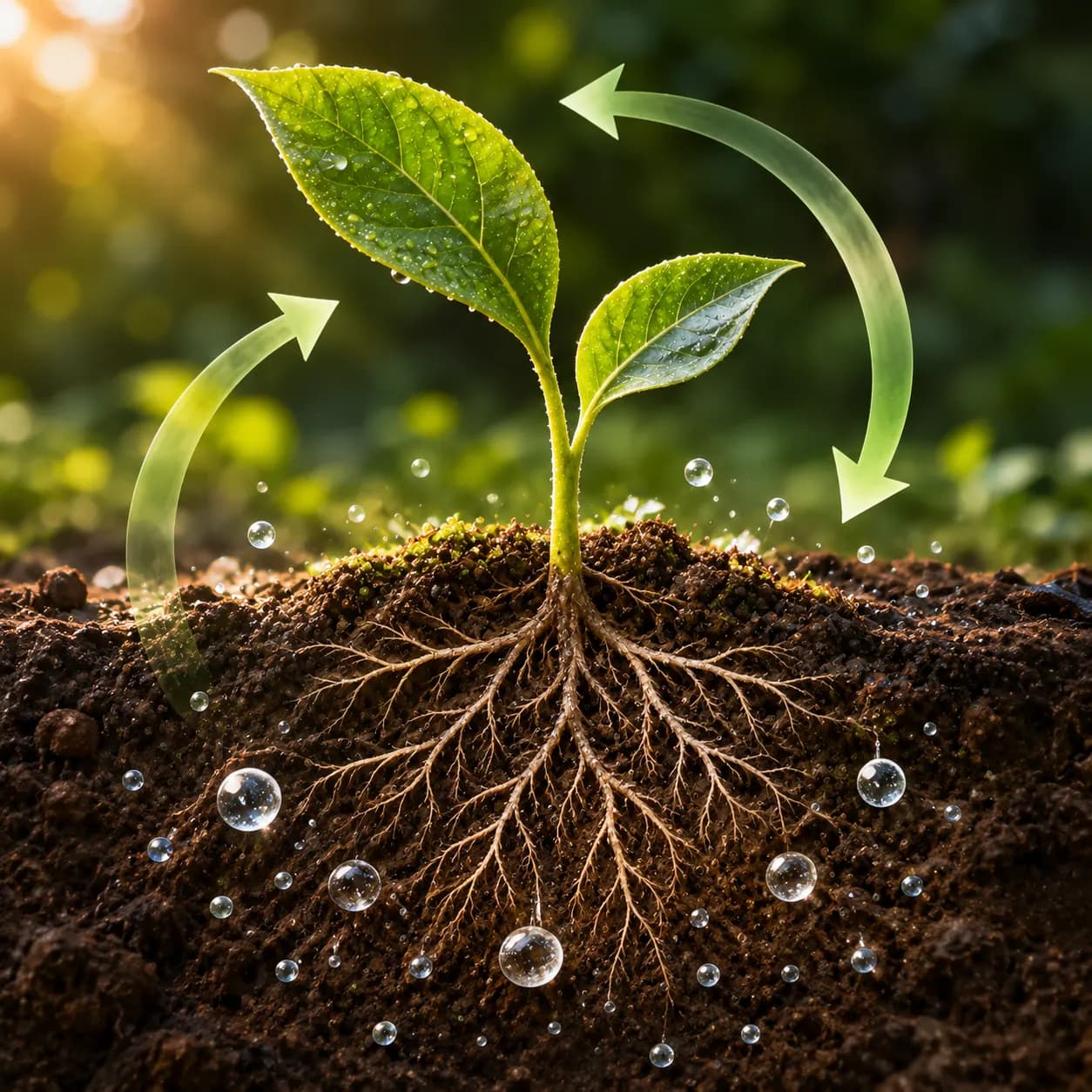
The soil
From 1% to 0.3% in seventy years.
Soil Organic Carbon (SOC) is the main component of soil organic matter and gives soil its water-retention capacity, structure and fertility. SOC content in India has come down to 0.3% from 1% during 1950–2020.
1950
1%
2020
0.3%
Fermented Organic Manure (FOM), produced from the residual slurry of biogas plants, offers a way to return organic matter and essential nutrients to agricultural land. It connects renewable energy production with soil health, making better use of biomass at every stage.
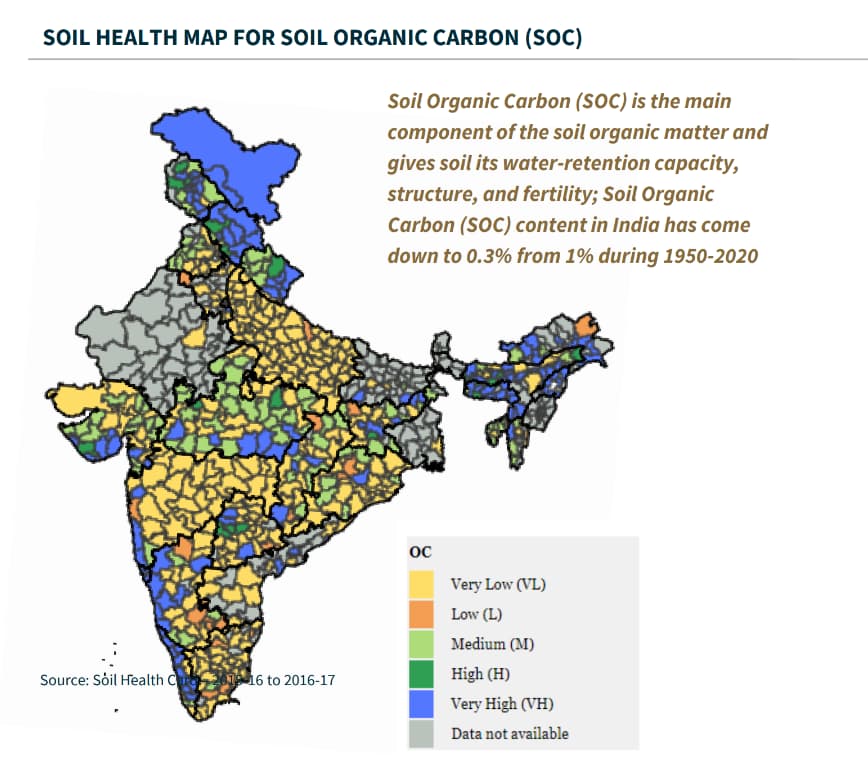
01Why organic carbon matters
The foundation of healthy soil
Soil Organic Carbon (SOC) is the main component of soil organic matter. It plays a vital role in maintaining soil structure, improving water retention, supporting beneficial microorganisms and making nutrients available to plants.
When organic carbon levels decline, soil can lose its ability to hold water and nutrients. Its structure and microbial activity can also deteriorate, affecting the conditions needed for healthy crop growth.
- Maintains soil structure
- Improves water retention
- Supports beneficial microorganisms
- Makes nutrients available to plants
Replenishing soil organic matter is therefore essential to maintaining soil health and supporting productive agriculture.
02Understanding Fermented Organic Manure
Turning biogas residue into a valuable soil input
Fermented Organic Manure is a nutrient-rich organic manure produced by processing the residual slurry generated during compressed biogas production. This processing improves the manure’s physical properties and nutrient availability, making it suitable for agricultural use.
FOM is a source of organic carbon and essential plant nutrients. Its composition varies depending on the organic feedstock used in biogas production.
A carbon-rich nutrient profile
An indicative FOM composition includes:
- Organic Carbon27.32%
- Nitrogen1.41%
- Phosphorus0.91%
- Potash0.84%
Actual composition varies with the feedstock used.
Available in two forms
SFOMSolid FOM
Processed, dried and composted into a solid form for easier handling and storage. It can also be further enriched into value-added organic manure products.
LFOMLiquid FOM
A liquid form that can be applied to agricultural soil through suitable irrigation systems or further enriched to produce liquid fertilisers.
03Benefits of FOM
Supporting soil health from the ground up
FOM contributes organic carbon and nutrients to the soil, supporting the natural processes that help maintain soil health.
Replenishes soil organic matter
Adds carbon-rich organic matter, contributing to soil structure and long-term soil health.
Improves water retention
Supports the soil’s ability to retain moisture, helping create better conditions for plant roots.
Supports beneficial microorganisms
Provides organic matter that supports microbial activity and nutrient cycling.
Improves nutrient availability
Fermentation breaks down organic material, making nutrients more readily available to plants.
Provides sustained nutrition
Releases nutrients gradually over time, supporting a more sustained supply to plants.
Complements chemical fertilisers
Can be used alongside chemical fertilisers as part of a balanced approach to soil nutrition.
04The circularity
From biomass to energy, and back to the soil
FOM connects two important parts of the agricultural value chain. Biomass is converted into renewable energy, while the residual slurry is processed into organic manure that can return carbon and nutrients to agricultural land.
Agricultural and organic biomass
Feedstock for biogas production
Compressed biogas production
Biomass is converted into renewable energy through anaerobic digestion
Residual bio-slurry
Processed into fermented organic manure
- SFOMSolid manure and value-added products
- LFOMLiquid manure and enriched liquid fertilisers
Agricultural soil
Organic carbon and nutrients return to the soil
05Making FOM accessible
Bringing carbon-rich soil nutrition to farmers
BiofuelCircle’s Biomass Bank extends the reach of FOM to farmers through Bhoovedyam, a Fermented Organic Manure made from processed crop residues and organic waste. Available in 50 kg bags, it offers farmers a ready-to-use organic manure for their fields.
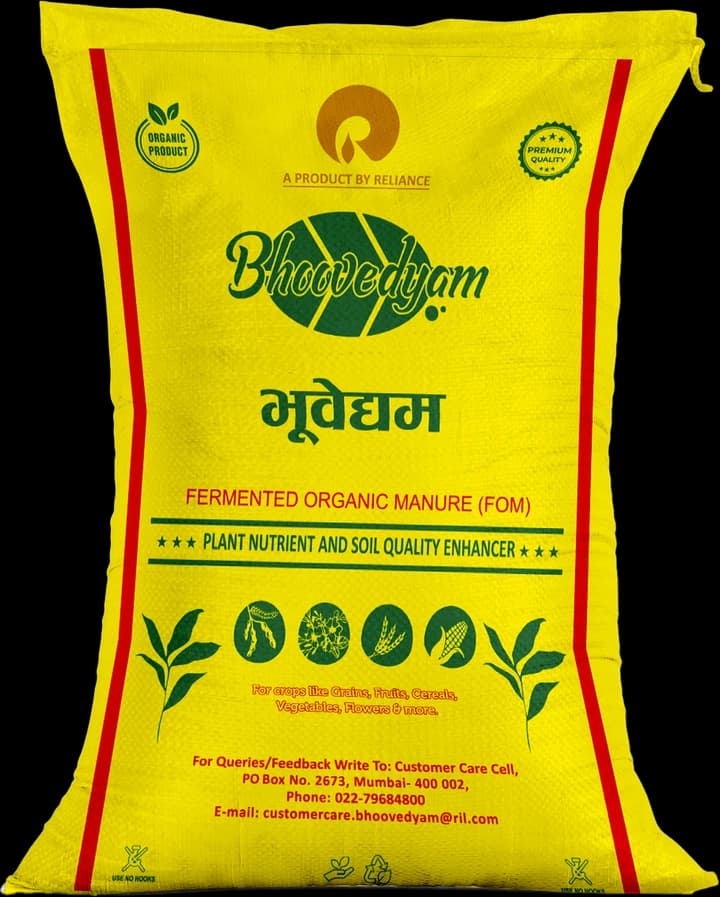
50kgBags
Keep exploring
More of what’s moving through the Circle
Every fuel has its own source, its own specifications and its own place in the value chain.
- Solid BiofuelsLoose biomass, briquettes and pellets, and the materials they are made from.Explore
- Liquid BiofuelsTyre pyrolysis oil, cashew soft residue, acid oil and biodiesel.Explore
- Gaseous BiofuelsCompressed biogas and the other pathways from organic matter to gas.Explore
- BiocharA carbon-rich resource made from biomass through pyrolysis.Explore