
Gaseous Biofuels
Gaseous Biofuels
Energy, in another form.
Not all renewable energy comes in solid or liquid form. Gaseous biofuels offer another way to put organic resources to use, converting biodegradable materials into fuels that can support a range of energy needs.
Each fuel follows a distinct pathway and serves different applications across transport, industry, and energy generation.
The gaseous fuels
- Biogas
- Compressed Biogas (CBG)
- Hydrogen
01The many forms of gaseous biofuels
Compressed Biogas (CBG / Bio-CNG)
Together, these pathways expand the possibilities for how resources are converted into usable energy, connecting different feedstocks and technologies with the needs of a changing energy landscape.
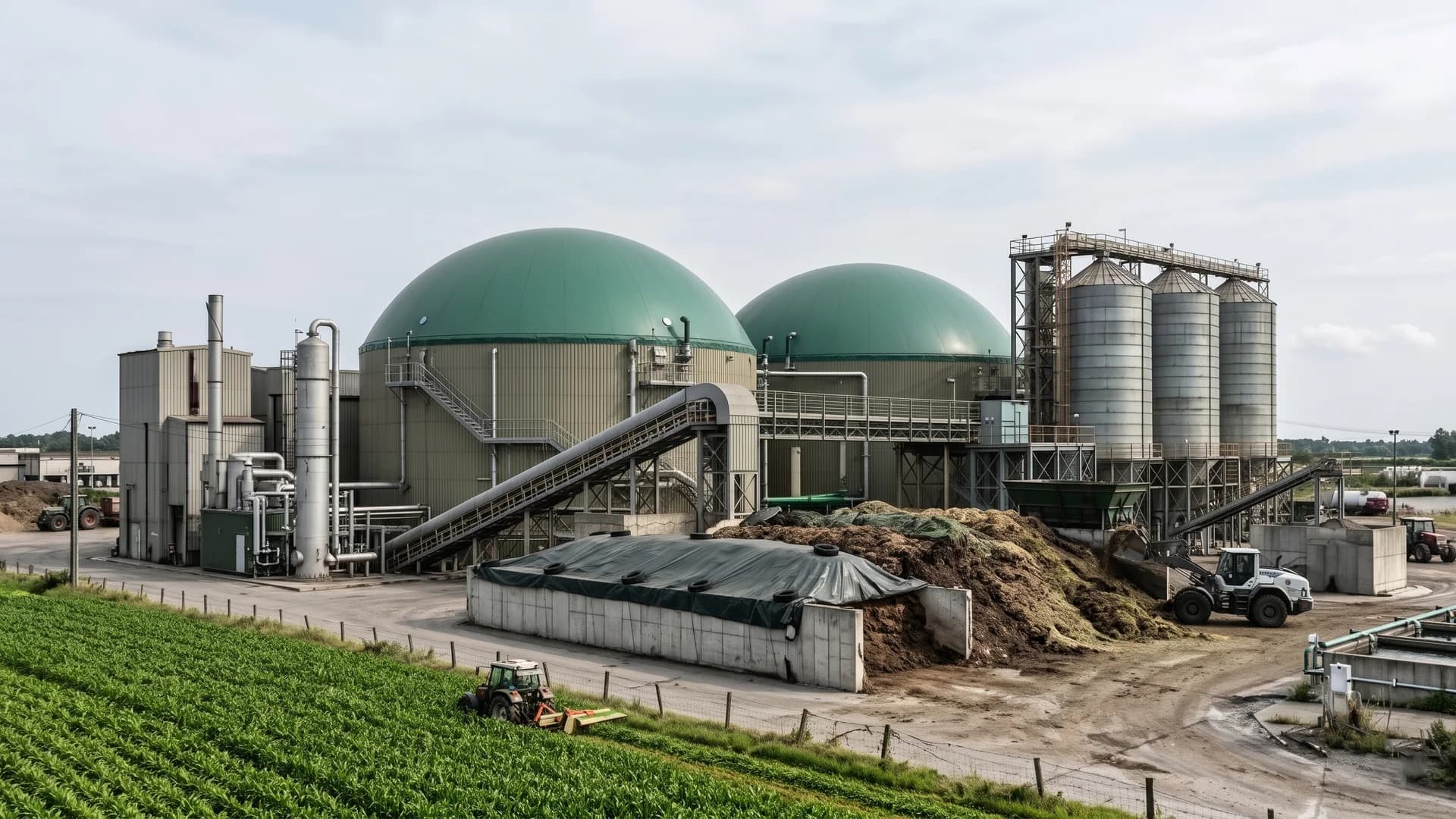
Compressed Biogas (CBG), also known as Bio-CNG, is a renewable gaseous fuel produced by purifying raw biogas to remove carbon dioxide, hydrogen sulphide and other impurities, and then compressing it for use as fuel. With a methane-rich composition and properties similar to conventional compressed natural gas, it can serve as an alternative in compatible applications.
How CBG is made
Organic waste and biomass
The feedstock
Anaerobic digestion
Produces biogas
Purification
Removes carbon dioxide, hydrogen sulphide and other impurities
Compression
Compressed for use as fuel
CBG / Bio-CNG
Methane-rich, with properties similar to conventional compressed natural gas
Source
Biogas produced through anaerobic digestion of organic waste and biomass, followed by purification and compression.
Applications
Transportation fuel and other suitable energy applications, depending on fuel specifications and available infrastructure.
BiofuelCircle’s role
BiofuelCircle strengthens the biomass supply ecosystem supporting the CBG sector through organised agricultural residue aggregation, storage and feedstock diversification.
- Organised agricultural residue aggregation
- Storage
- Feedstock diversification
Its initiatives also extend to circular agriculture through the promotion of Fermented Organic Manure (FOM), derived from digestate generated by CBG plants.
Explore Fermented Organic Manure02Understanding fuel characteristics
Each gaseous fuel has its own composition and handling requirements
These characteristics help determine how it is processed, stored and used.
Methane content
A key indicator of biogas quality and upgrading, influencing the suitability of CBG for its intended application.
Calorific value
Indicates the energy released during combustion and helps assess a gas’s suitability for heat and power applications.
Gas composition and impurities
Carbon dioxide, moisture and trace contaminants influence purification requirements, fuel quality and equipment compatibility.
Pressure and storage requirements
Important considerations for compressing, storing, transporting and using CBG.
Hydrogen purity
A critical consideration for green hydrogen, with required purity depending on the intended industrial or energy application.
03Pathways
Different gases. Different pathways. A wider energy landscape.
From organic matter converted into biogas to upgraded CBG and hydrogen produced using renewable electricity, gaseous fuels offer distinct pathways to meet evolving energy needs.
- Organic matter
- converted intoBiogas
- upgraded toUpgraded CBG
- Renewable electricity
- producesHydrogen
Exploring gaseous fuels?
Connect with BiofuelCircle to discuss your requirements and explore the possibilities.
Keep exploring
More of what’s moving through the Circle
Every fuel has its own source, its own specifications and its own place in the value chain.
- Solid BiofuelsLoose biomass, briquettes and pellets, and the materials they are made from.Explore
- Liquid BiofuelsTyre pyrolysis oil, cashew soft residue, acid oil and biodiesel.Explore
- Fermented Organic ManureBiogas residue, turned into organic matter that returns to the soil.Explore
- BiocharA carbon-rich resource made from biomass through pyrolysis.Explore